

Chromatography
Free
Analysis
Plasmion’s SICRIT® Ion Source enables to perform sensitive chromatography-free direct injection on any LC-MS instrument without extensive sample preparation. Direct and automated introduction of solid, liquid or headspace samples into the ion source via the heatable desorption module for quantitative analysis within seconds.



Solid
exemplary
results
Fast, easy, no sample preparation
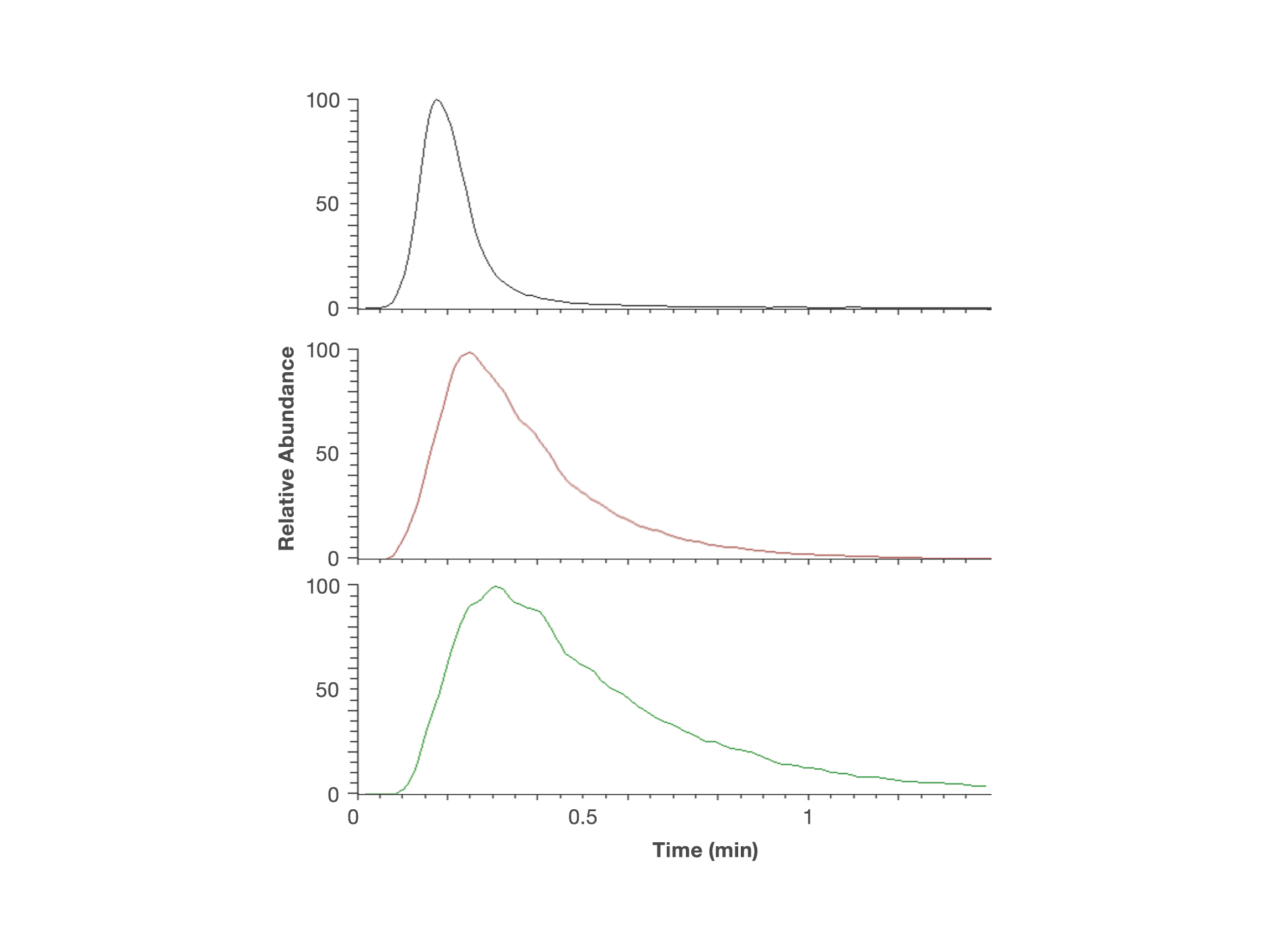
By inserting a SPME Fiber or SPME Arrow into the desorption module the enriched analytes are thermally desorbed simultaneously. In this case the extracted mass traces of three pesticides from a spiked soil sample are shown. The desorption peak shape will depend on the volatility and chemical adhesion to the SPME material. Each peak can be integrated using your standard (LC-)MS software for fully quantitaive results without using any chromatography. Due to slightly different desorption profiles also data-deconvolution for e.g. data independent workflows is possible.
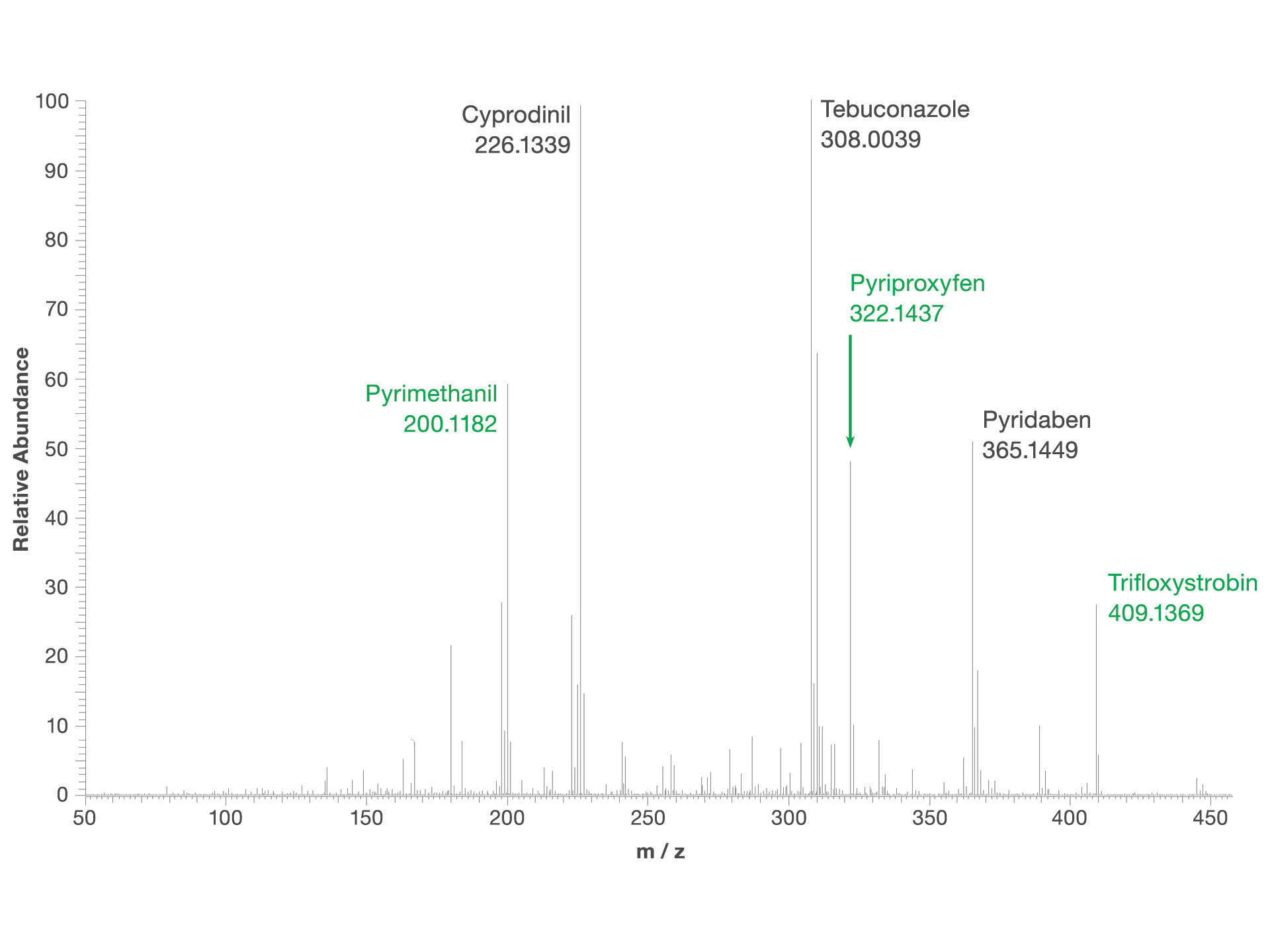
Due to its soft and broad ionization, SICRIT® enables the parallel monitoring of an theoretically unlimited amount of substances using e.g. full scan high resolution MS. The spectra of pesticides analyzed in soil (left) show hardly any fragmentation and are therefore easy to interpret, directly showing the molecular information. This is tremendously beneficial for fast non-target screenings.
At the same time these features also simplify targeted analyses using MRMs since all intensity is confined on the parent MH+ species instead being spread over multiple in source fragments like e.g. in EI.
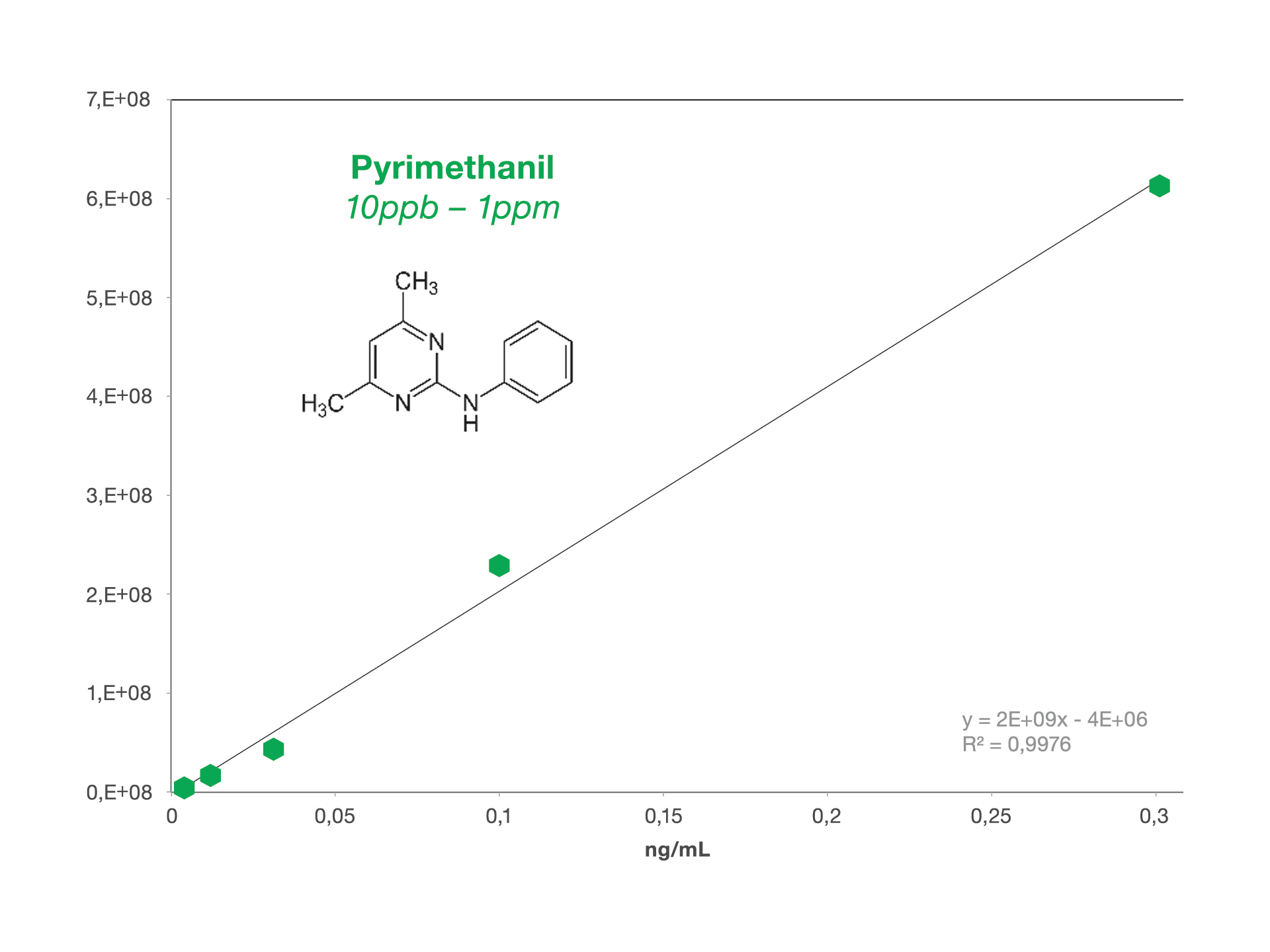
Even for complex matrices e.g. wastewater, this direct SPME quantitation may propose a viable alternative to conventional chromatography aproaches, especially when using internal standardization. A fully automative pre-quantification, as shown for the pesticide Pyrimethanil on the right, separating all negative from potentially positive samples therefore may help to save up to 90% instrument runtime and chromatography consumables.
Also the fast analysis times enable the use of standard addition aproaches saving costs for expensive isotopic labeled standards.
Liquid
exemplary
results
Reproducible & quantitative without chromatography
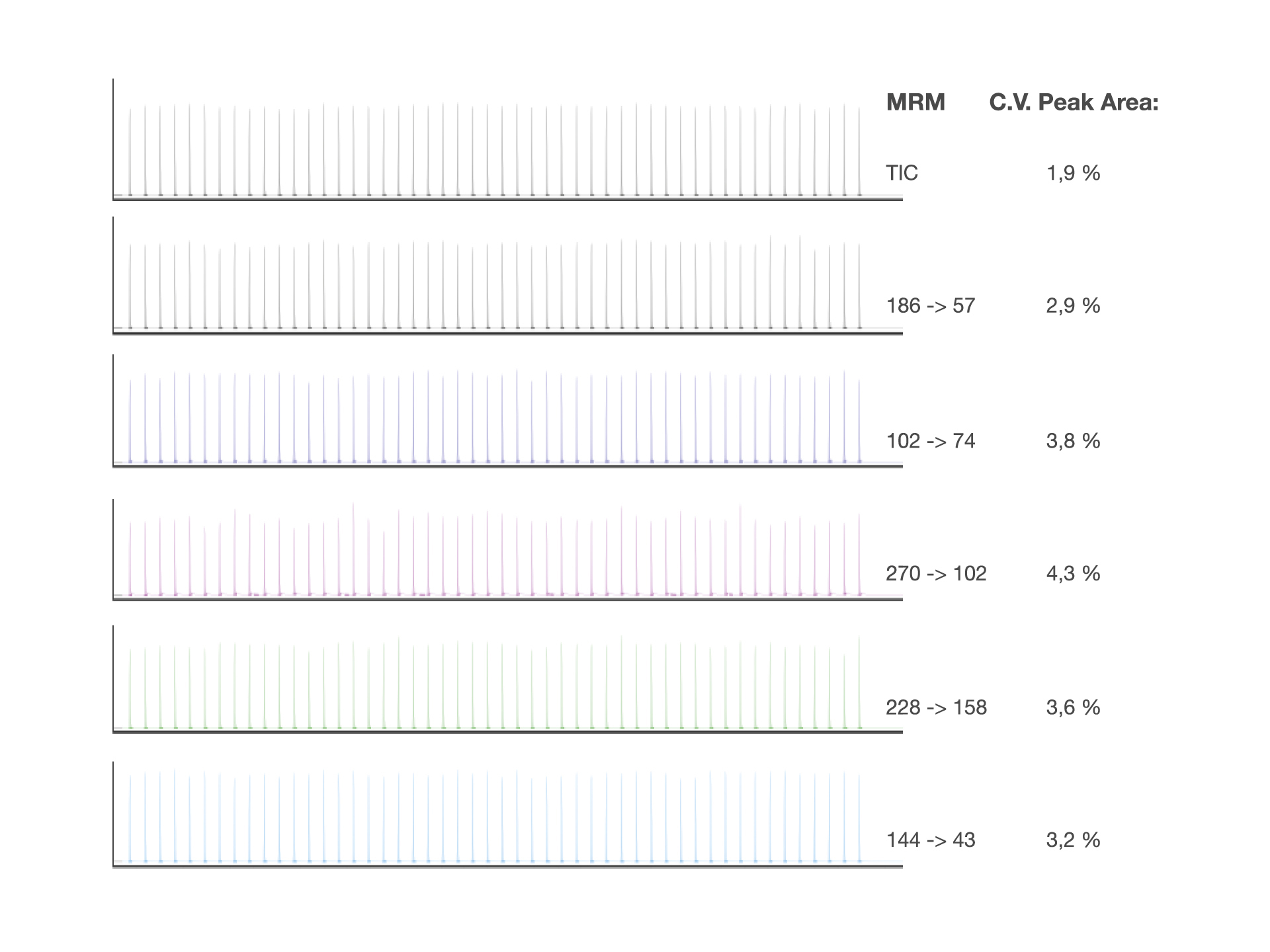
As an example we demonstrated the reproducibility of 50 direct liquid injections of an alkylamine standard monitoring 5 MRMs in parallel. This proves, that chromatography-free SICRT® mass spectrometry enables the same precissions (RSD <5%) as you are usually expecting from classical chromatography MS couplings. This actually shows 50 fully quantitative analyses performed in 30 minutes.
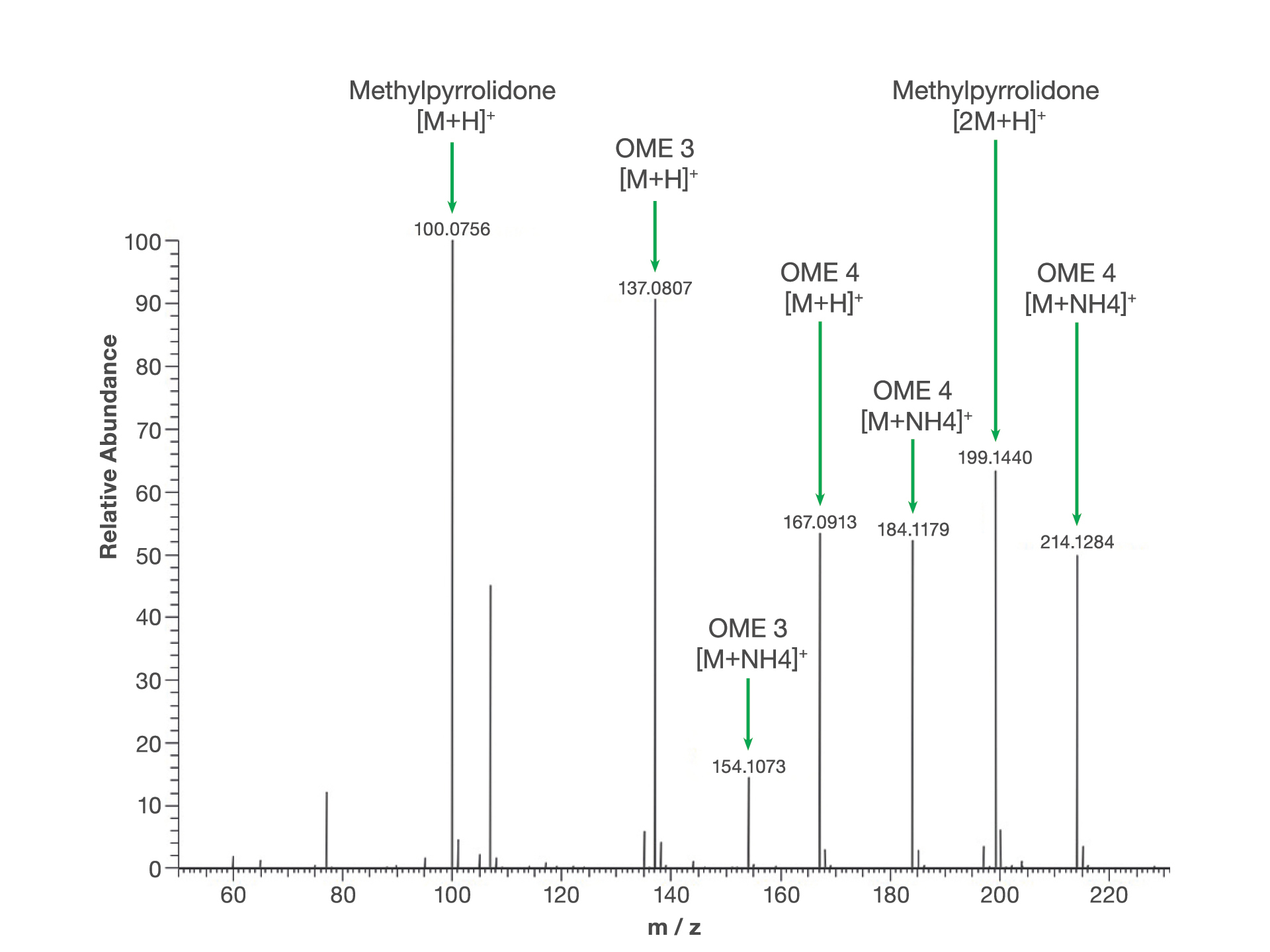
A real world example of direct liquid MS analysis is the measurement of Orthomethylethers (OME) as biofuel.
Here a comprehensive insight on the composition, size distribution and additives can be gained in less than 10 seconds of measurement time.
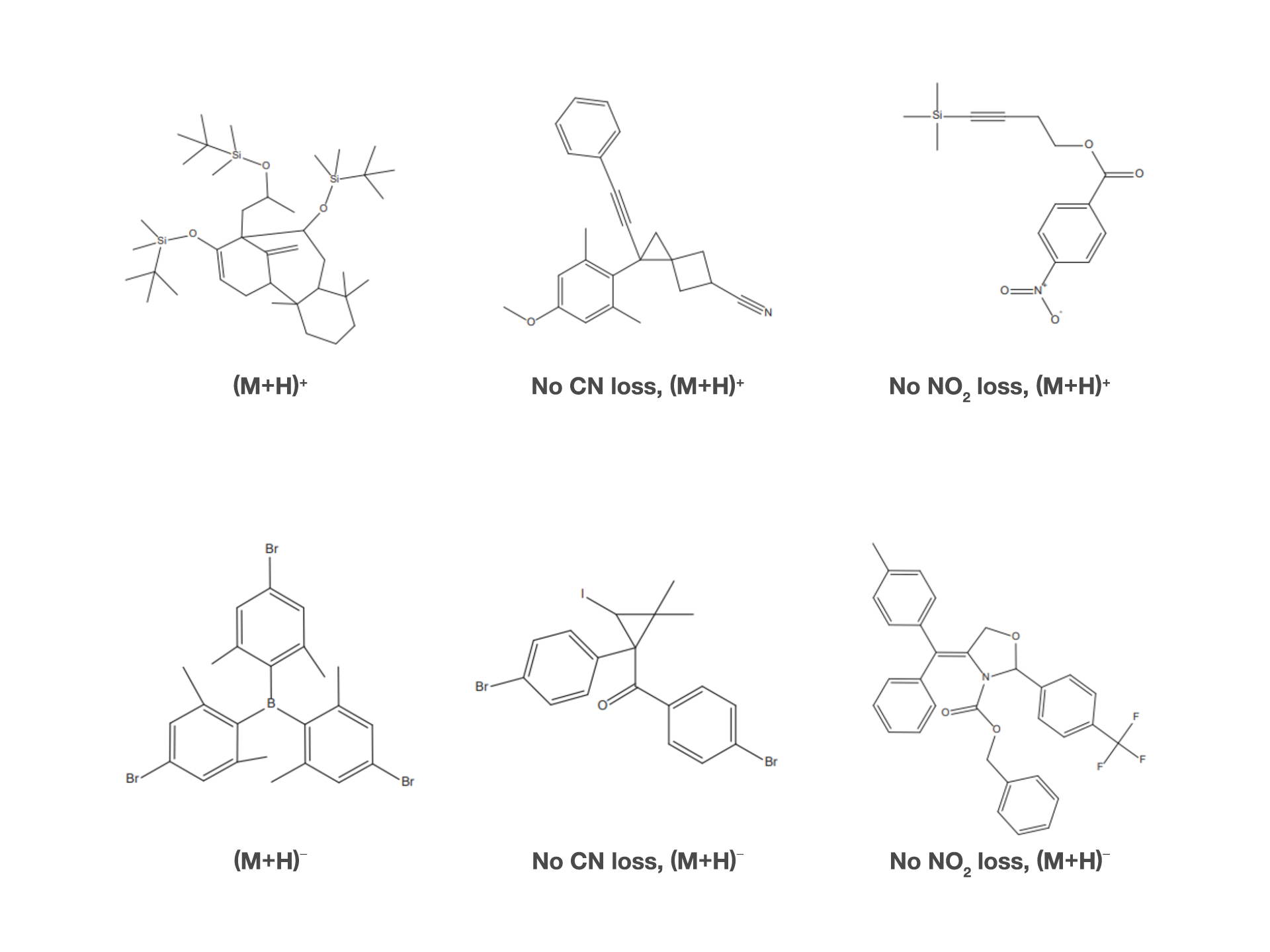
Struggling with ionization? The unique ionization capabilities of SICRIT® enable the measurement of „problem“ molecules as shown on the right hand side. All of these molecules could not be ionized efficiently via ESI or APCI, but direct SICRIT® MS delivered perfect ionization as molecular Ion.
Gas
exemplary
results
Measure & quantify samples and processes in real-time.
SICRIT® simplifies food analysis by avoiding issues in traditional mass spectrometry, where heat-induced crystallization of sugars or salts can cause deposits and distort results.
Conventional methods require extensive and error-prone sample preparation to prevent this. SICRIT® instead analyzes the headspace, the volatile components above the sample, reducing preparation from over an hour to just minutes.
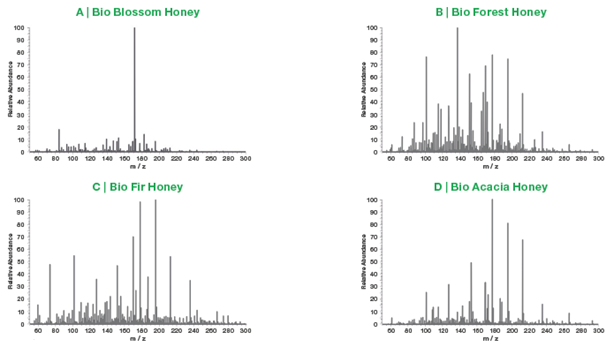
Despite the simplified workflow, it delivers equal or even better information quality, enabling precise identification, change analysis, and origin determination, for example in honey. It also provides high reproducibility, yielding nearly identical chemometric results even weeks later.
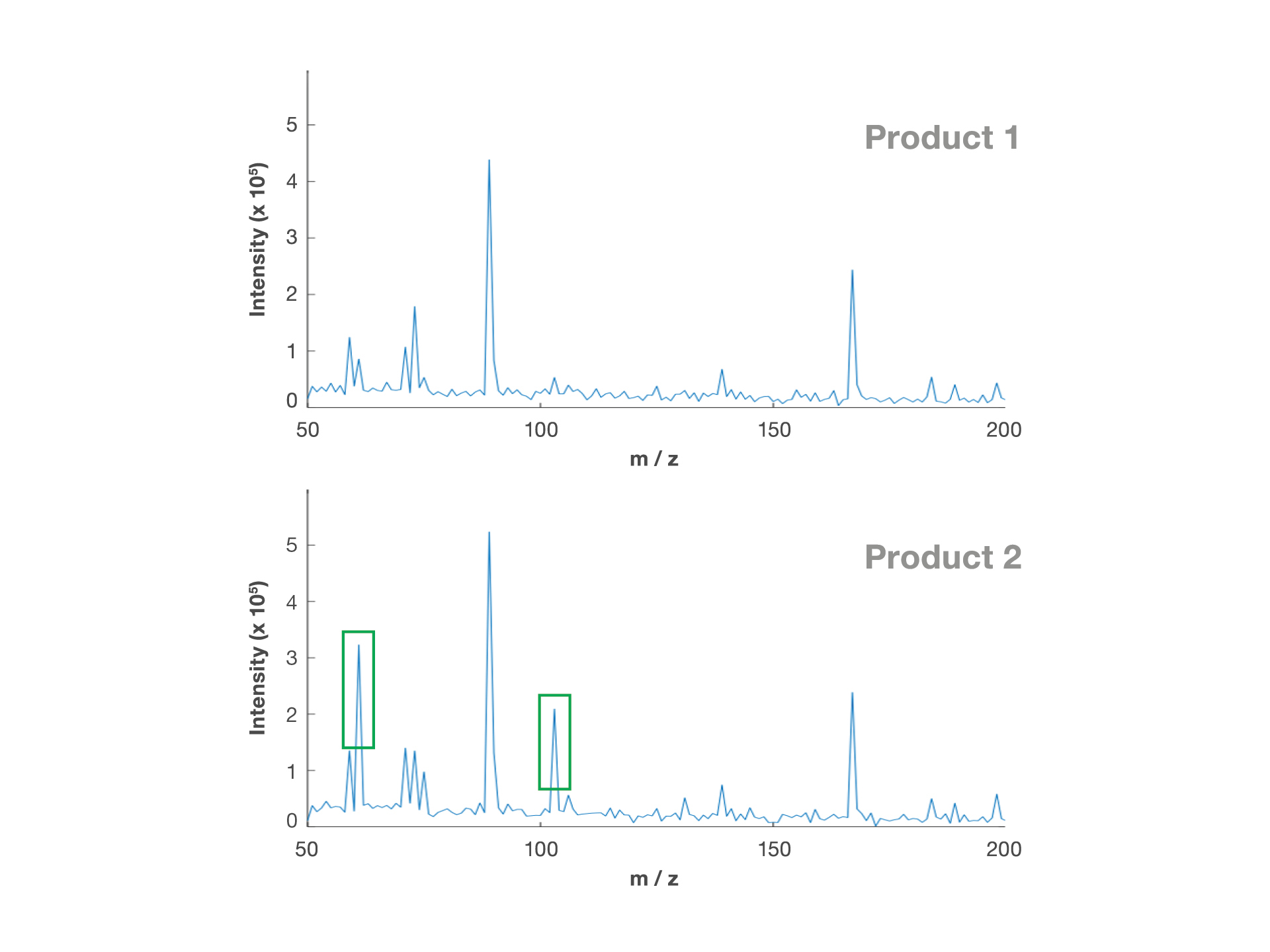
VOC analysis is challenging for classical instrumentation. With SICRIT® you can directly monitor e.g. off flavors (shown left) or other contaminations of your products without the need for gas chromatography. It is also fully compatible with classical lab automation and various other off-line sampling techniques (e.g. TD, Teddlar bags, etc.). Developed for the gas phase detection of chemical warfare agents, SICRIT® converts any LC-MS into a super sensitive VOC analyser.
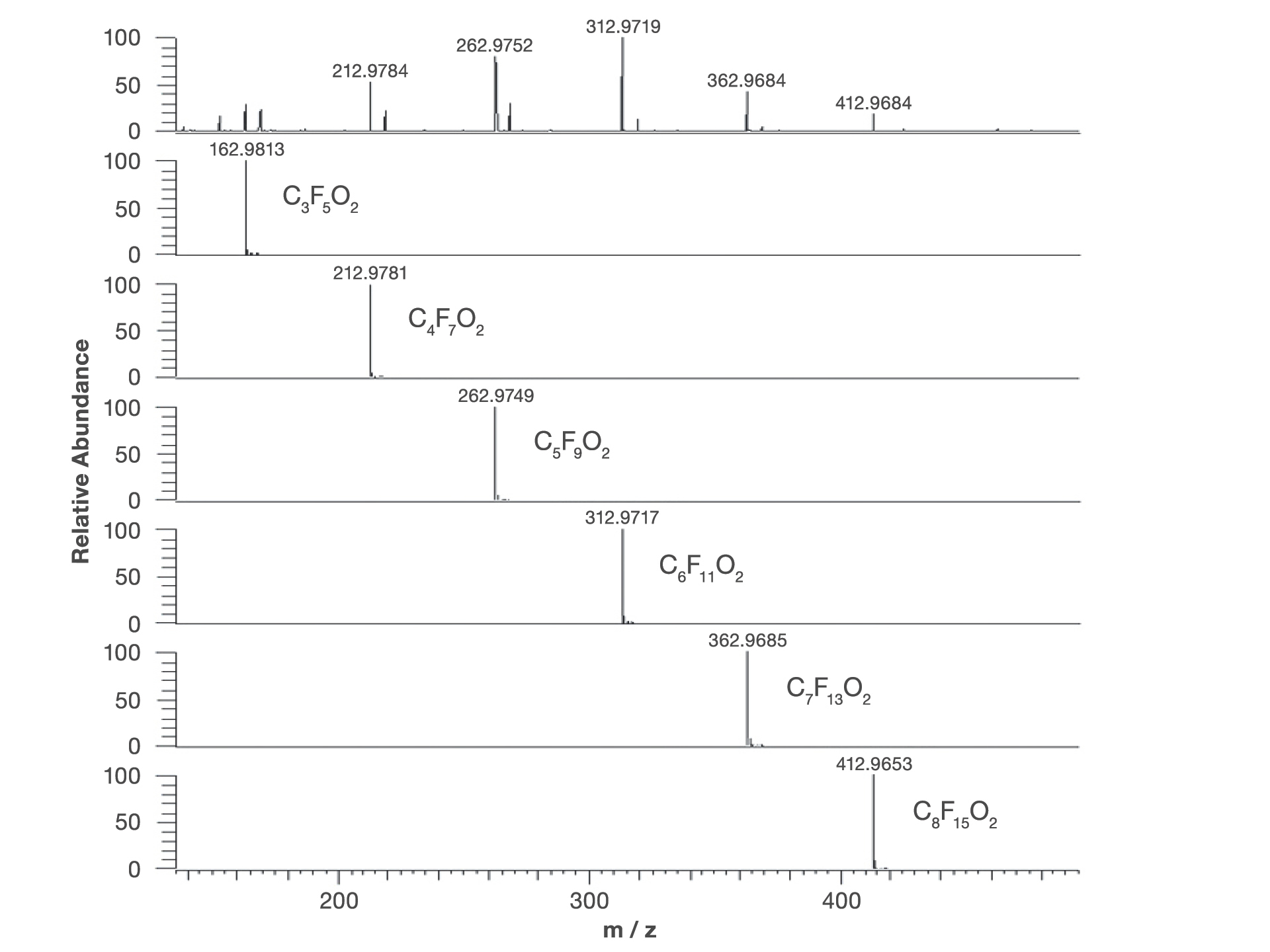
Positive? Negative? SICRIT® delivers both, simultaneously. When analyzing e.g. perfluorinated components in headspace, no change in settings has to be made on the SICRIT® source when switching the MS from positive to negative mode. This enables fast polarity switching applications and opens the field for chromatography-free mass spectrometry analysis, screening and quantitation of these highly regulatated perfluorinated pollutants without chromatography in real time.
Knowledge Base

Explosives Analysis Using SICRIT® Ionization with LTQ-MS
This study demonstrates the use of SICRIT® ionization coupled to an LTQ mass spectrometer for direct, sensitive analysis of explosive residues, optimizing adduct formation to enhance detection performance and reliability.


Broad PFAS detection in air: A comprehensive and solvent-free method featuring SICRIT®
This solvent-free SICRIT®-SPME-HRMS method enables comprehensive PFAS analysis from ultrashort- to long-chain species with reduced fragmentation, high sensitivity, and minimal background interference in atmospheric samples.

A point-of-need framework for illicit drug identification with high-resolution mass spectrometry
We demonstrate a rugged, field-deployable high-resolution mass spectrometry approach for rapid illicit drug identification at the point of need. This framework enables near real-time, chromatography-free analysis to support faster public health and forensic response.
Discover our Products
Find the perfect solution for your use case, with Plasmion’s advanced technology and expertise in chemical analysis for research or industry.